Trump Administration's Gaza Settlement Plan: A Matter of Ethnic Cleansing
- Earl O'Garro
- Mar 6, 2025
- 3 min read
Updated: Jan 18
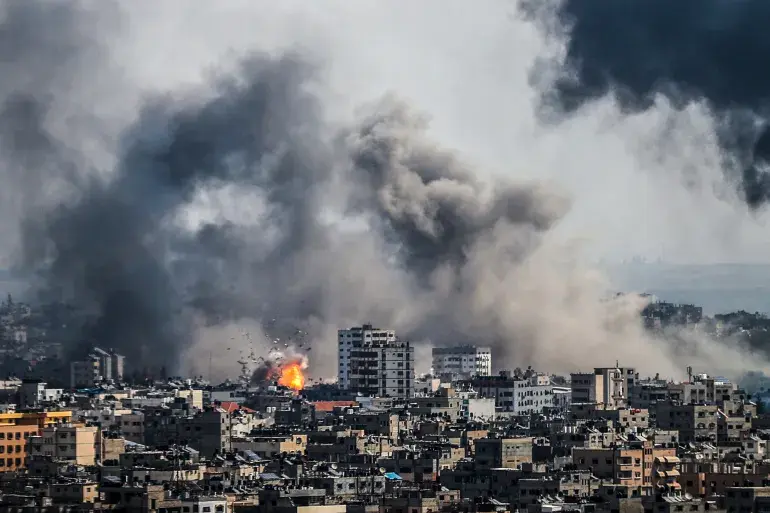
President Donald Trump revealed in February 2025 a highly contentious plan to transfer Palestinians from Gaza to neighboring countries like Egypt and Jordan. His plan was to transform Gaza into the "Riviera of the Middle East" and did not exclude using American forces to do so. The plan has been widely criticized as a means of ethnic cleansing, a term applied to the forced transfer of a religious or ethnic population from a particular territory, often with the use of violence or coercion.
United Nations Secretary-General António Guterres denounced the plan, outright calling it "ethnic cleansing" and reiterating that Gaza has to be included in any future Palestinian state. The forced transfer of millions of Palestinians would be a contravention of international law, like the Geneva Conventions, which prohibit the forced transfer of protected populations. The right to remain in one's home is a fundamental human right, and attempting to remove a population from a territory contradicts these basic principles.
Even neighboring countries have rejected the proposal. King Abdullah II of Jordan reaffirmed his opposition to mass displacements in accordance with a typical Arab posture against such a step. Egypt and Jordan feel that absorbing displaced Palestinians would not only damage opportunities for a Palestinian state but would also lead to dire security and political instability in both countries.
The historic precedent of forced relocation emphasizes the gravity of such a plan. The Palestinians have already been subject to massive displacements, particularly during the 1948 Nakba and the Middle East war in 1967, and now have numerous refugees in neighboring nations. To do it again would double historic injustices and further destabilize the region. The plan also aligns with hard-line Israeli demands for Palestinian relocation and settlement expansion, which have been universally decried by the international community.
Examples from History: Forced Displacement
Throughout history, forced relocation and ethnic cleansing have been a recurring phenomenon. Some of the most widely known examples include:
The Armenian Genocide (1915-1917)
· The Ottoman Empire deported and systematically slaughtered 1.5 million Armenians, forcing many survivors into Syria's deserts.
· The majority of Armenians were removed from their homeland, with thousands being resettled and thousands more being killed.
The Holocaust (1939-1945)
Nazi Germany systematically displaced and killed millions of European Jews.
Other targeted populations included Slavs and Romani, many of whom were detained in ghettos and extermination camps.
Partition of India (1947)
The partition of British India into India and Pakistan resulted in the displacement of approximately 15 million people based on religion.
The violence surrounding the event led to an estimated 1-2 million deaths.
The Nakba (1948)
Over 700,000 Palestinians were displaced or forced from their homes due to war and Israeli military actions.
They became refugees in neighboring nations and have remained in exile ever since.
Expulsion of Germans after World War II (1945-1950)
Millions of Germans from Eastern European nations such as Poland, Czechoslovakia, and Hungary were displaced when borders were redrawn.
An estimated 12-14 million were displaced, and hundreds of thousands lost their lives in the process.
The Bosnian Genocide & Ethnic Cleansing (1992-1995)
Serb forces carried out ethnic cleansing against Bosniaks (Bosnian Muslims) and Croats during the Yugoslav Wars.
Thousands were brutally murdered in atrocities like the Srebrenica genocide, and millions were displaced.
The Rohingya Crisis (2017-Present)
Myanmar's armed forces drove hundreds of thousands of Rohingya Muslims into Bangladesh.
The United Nations has characterized mass murders, rapes, and village burnings as ethnic cleansing.
Uyghur Repression in China (Ongoing)
The Chinese government has placed enormous numbers of Uyghur Muslims in Xinjiang internment camps.
Reports indicate forced cultural assimilation, mass surveillance, and displacement, which some have described as a slow form of ethnic cleansing.
Trump's plan to relocate Palestinians from Gaza is a continuation of a long history of ethnic cleansing. It violates international law, disregards Palestinian rights and aspirations, and threatens regional stability. The international community has a duty to uphold principles of justice and human rights by rejecting such a plan and demanding a solution that maintains the dignity and sovereignty of the affected populations.
History has repeatedly proven that forced displacement results in long-term suffering, instability, and humanitarian crises. Instead of repeating these tragic mistakes, efforts should be focused on diplomatic solutions that promote peace, security, and self-determination for all.


Comments