An Answer From Michigan
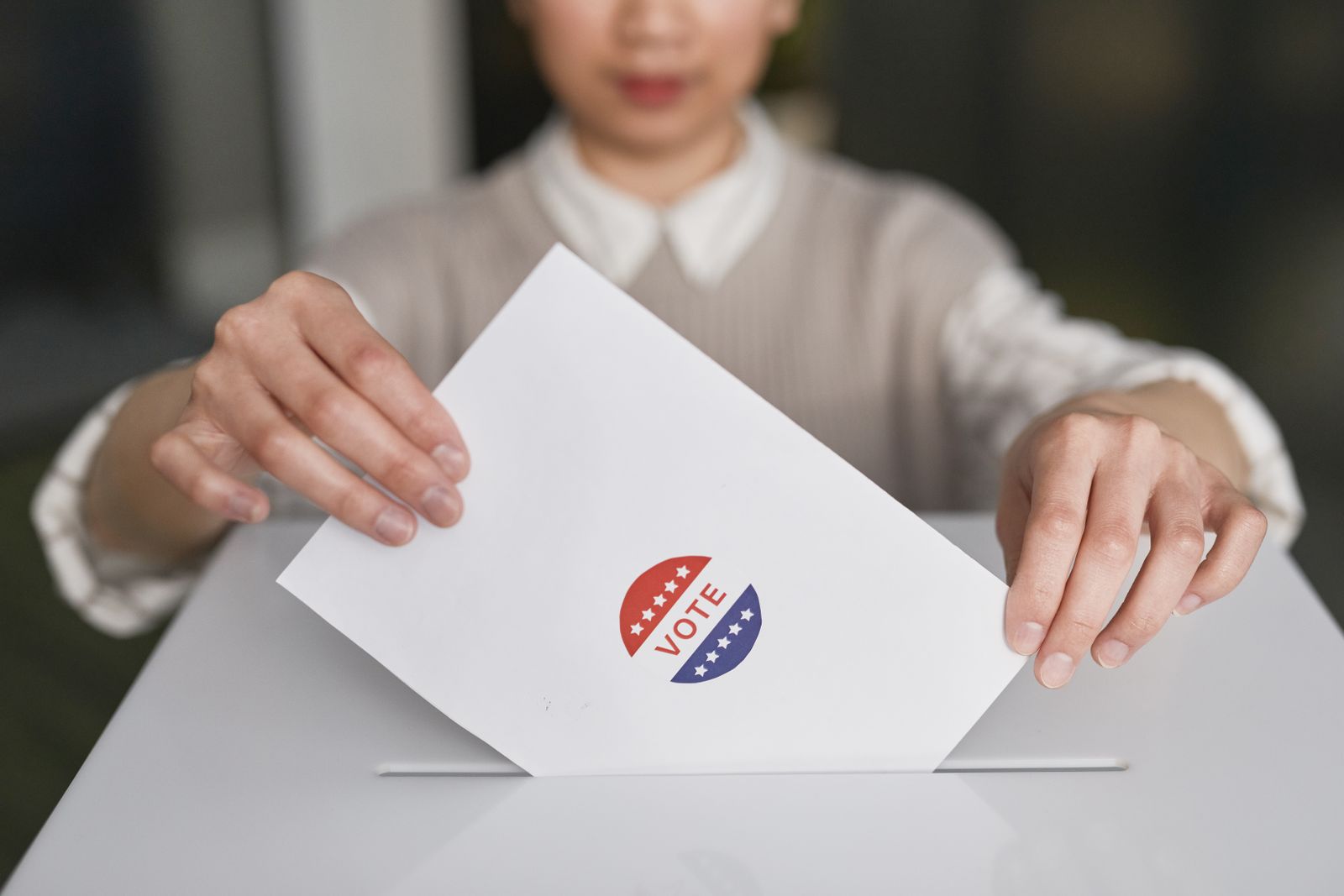
By Earl O'Garro
I was awake late on Tuesday, at the kitchen table where I have written most of what you have read from me this year, with the returns from a Democratic primary in Michigan on the screen and the small provisional stillness of a man who has been waiting, for the better part of the summer, to see whether the thing he has been arguing for on this page would prove out on the actual returns board of an actual American election, or whether the arguing itself was going to have to carry him through another six months of losing before the ledger began to turn.
The ledger turned on Tuesday.
An epidemiologist named Abdul El-Sayed, the son of an Egyptian immigrant, born in Detroit, forty-one years old, holder of a medical degree from Columbia and a doctorate from Oxford, who has never before held elected office in the ordinary sense of the word, who spent the year facing an outside-money apparatus that spent something on the order of fifty-four million dollars against him and five million for him at a ratio of nearly eleven to one, who was opposed by the sitting governor of his own state, who was opposed by the majority leader of his own party, who was opposed by every institutional decoration a Democratic Senate primary in a swing state can be opposed by, won the primary. He won it by roughly a point. He now advances to the November general election as the Democratic nominee for the United States Senate in Michigan. And the single largest contribution to the money that was thrown at him and failed, larger than any corporate PAC contribution and larger than the party-establishment contributions combined, was more than thirty million dollars from the American Israel Public Affairs Committee, which is the most that particular apparatus has ever spent to defeat a single Democratic candidate since it began operating in 2022.
I want you to sit with that number for a moment before I go on. Thirty million dollars, from one lobby, in one state, in one primary, to defeat one candidate whose principal disqualifying trait, as measured by the lobby's own internal criteria, was that he had been publicly, morally, and eloquently opposed to the war on Gaza and, later, to the war we are now prosecuting on Israel's behalf against Iran. They spent that money. They lost anyway.
Let me tell you what that means.
I have written about this machinery all year, and if you have been reading me you will already know the shape of the argument. Thomas Massie, in Kentucky, this past spring, at a cost the ordinary congressional campaign cannot conceive of, for the specific offense of having read the Constitution honestly, was defeated in his primary and lost his seat. I wrote at the time that his defeat was the sentence every currently serving member of Congress would carry in his pocket for the rest of the cycle. I still believe that. What I want you to notice this morning is that the sentence has been joined, in the same pocket, by a second sentence, and the second sentence is a different sentence entirely, and the second sentence is that the money can be beaten. Massie's defeat instructed the Congress that the money is decisive. El-Sayed's victory has just instructed the same Congress that the money is no longer decisive. Those are not merely different lessons. They are opposite lessons. And the members of the House and Senate who carry both sentences in their pockets over the next several months are going to make private accountings about which sentence they intend to build the next chapter of their careers around, and the accountings, on the historical record of Republics under this kind of pressure, will not all break in the direction they would have broken in April.
I want to be specific, because the general points I am about to make are the kind of general points a reader with any patience deserves to see grounded in specifics.
The first specific is that a thirty-million-dollar spend against one Democratic Senate primary candidate, which then loses the primary by a point, is not the sign of a lobby that is priced correctly against the current electorate. It is the sign of a lobby whose marginal dollar has stopped moving votes at the rate its donors have been told to expect. When the marginal dollar of a political-influence operation stops moving votes at the priced rate, the donors ask, in the private conversations that donor classes are always having in the private clubs they always have them in, what exactly it is that they have been paying for. When the donors ask that question, the operation enters a phase of decay that is not, on the historical record, easily reversed. I do not have to predict this decay from my kitchen table. The lobby's own operating math will predict it for them in the reports they are commissioning this week.
The second specific is that Michigan, alone among the swing states, holds the largest Arab American voting population in the country, and that population, along with the broader Muslim American voting population that has grown across the Midwest over the last two decades, has spent the last twenty months in a specific and unignorable state of moral fury about the direction of American foreign policy on Israel, Gaza, and now Iran. Until Tuesday, the arithmetic of that fury on the November board looked like a loss of enthusiasm at the top of the Democratic ticket that a Republican, Mike Rogers, was going to be able to convert into a narrow statewide win. That arithmetic changed on Tuesday. The Arab American and Muslim American voters of Michigan now have, on the November ballot, a candidate who is one of their own by heritage and by moral commitment, and who is asking for their vote not as an afterthought but as the visible spine of his coalition. Mike Rogers, whom I have read on and studied and whom I do not personally consider a serious strategist, does not have the coalitional discipline or the moral fluency to answer that math. He is going to try. He is going to lose. And Michigan, which was on the general-election map at the top of the Republican column, is going to come off the map. That is not a partisan claim on my part. That is an observation about where the water is now flowing.
The third specific is that the same evening, across several other primaries around the country, insurgent progressive and heterodox candidates outperformed the polling the establishment had prepared for itself, and while I do not want to over-generalize from a single Tuesday, I do want to say what a single Tuesday, when it accumulates with the several Tuesdays before it, means. It means the country is leaning. It has been leaning since the winter, when the war on Iran was launched on Israel's behalf in a room the American voter was not consulted in. It has leaned further with every subsequent operation prosecuted in that room. On Tuesday it leaned by an amount the money in the room could not, this time, correct for. That is where we are.
I said in the small note I have run with these pieces that I do not intend to leave my readers in the wreckage without the other half of the record. I want to keep the promise now, because Tuesday's returns are the other half of the record, in the specific and legible form the record has not been able to give me all summer, and I do not want the promise to arrive silently.
The other half is this. The room I have been writing about, the room that has been co-occupied for a generation by the chief executive of a foreign electorate and that arranged the ordnance for last week's strikes on Iranian soil, is not an eternal room. It is a set of arrangements. The arrangements are subject to arithmetic. On Tuesday, the arithmetic returned an answer, in the specific and unimpeachable form of a primary victory in a swing state, that says the room's leverage over the American electorate has begun to weaken. The weakening is not complete. It is not going to be complete in one cycle. But the weakening has begun. It has begun where it has to begin, which is in the primary electorates that supply the members of Congress the room requires for its votes. The room's members are, in Massie's case, being taken out for defiance. And now the room's approved alternatives are, in Stevens' case, being taken out for compliance. Both of those things are happening at once. When both of those things are happening at once, you are in a period of political realignment, and you know a period of political realignment when you are inside one, because the money in the room stops being able to price the outcome.
I want to say a word about hope, because the whole point of what I am trying to do in these pieces, especially in the new rhythm you and I are working out together, is to make sure hope arrives at the same volume as the loss. I do not want to leave you thinking that Tuesday is the end of the story. It is not the end of the story. Mike Rogers will run a hard general. AIPAC will spend against El-Sayed again in November, and the number this time will be larger than the number they lost with. The wars we are prosecuting on Israel's behalf will not stop because of a Democratic primary in one state, and the families we are killing on behalf of another country's foreign policy will not be un-killed because Michigan voted the way Michigan voted on Tuesday, and I do not want either you or me to make the mistake of thinking that a single result is a single answer. What I want you to see is what a single result of this size, in this state, against this money, on this day, means about what remains possible in a Republic that has not yet forgotten how to be a Republic. It is possible. That is the whole of the sentence I am asking you to carry into the rest of your week. It is possible. The room can be dismantled. The arrangement can be reversed. The freshman class of the next Congress, which I told you in the last piece would contain more members willing to name what they see than the current class does, is going to contain them. Some of them are already running. Some of them will win. That is not sentiment. That is Tuesday's proof.
I want to close with what I owe my children, because I write these pieces for them as much as for anyone else. What Tuesday gave them, and what I owe them the honesty of telling them clearly, is a country that is still capable of correcting itself in the ordinary democratic ways it was designed to correct itself. That is a bigger inheritance than any dollar figure I could hand them privately. It is the inheritance of a Republic that works, imperfectly and slowly and with the specific interruptions of political fury that are the price a serious country pays for continuing to be one. I am handing my children that inheritance this morning with a small increment of confidence I did not have last week. I owe Tuesday's voters in Michigan the acknowledgment that they, and not I, produced the increment. I want to thank them. I want to congratulate Abdul El-Sayed by name. I want to say plainly that his victory belongs to a coalition that has been building for a decade in Michigan under an American press that mostly declined to notice it was building, and that the same coalition is building, quietly and away from the American press, in several other states this cycle, and that the returns from those states are coming.
The room just lost one. It is going to lose more.
I intend to keep writing.